
A fresh legal clash in the US could shape how prediction markets operate and what players can legally access.
Federal Regulator Pushes Back
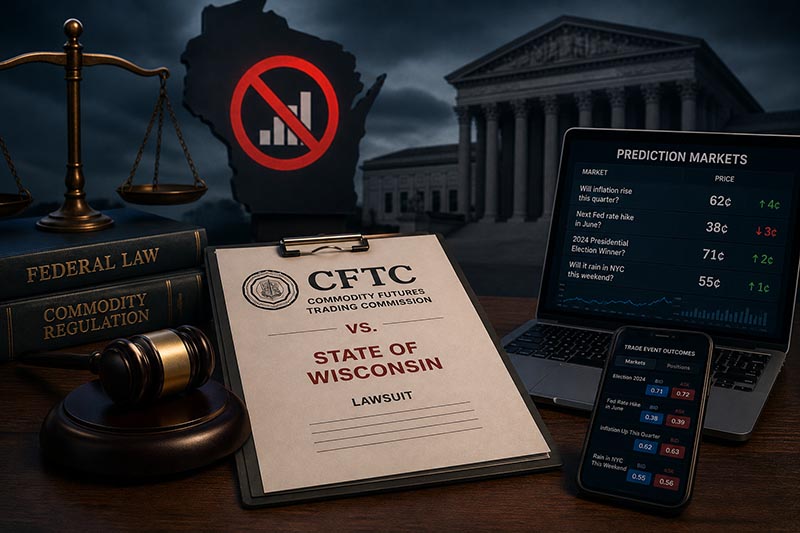
The Commodity Futures Trading Commission (CFTC) has filed a lawsuit against Wisconsin, aiming to stop the state from shutting down or restricting online prediction markets.
At the heart of the dispute is a simple question: are these platforms financial markets or just another form of online gambling?
Wisconsin clearly leans toward the latter. The state recently launched legal action against several major platforms, including Kalshi, Polymarket, Coinbase, and others, arguing they are offering illegal betting products to residents.
The CFTC disagrees, insisting these markets fall under federal oversight as derivatives trading, not gambling.
Why Prediction Markets Are Suddenly a Big Deal
Prediction markets let users trade on the outcome of real-world events. That can range from elections and economic data to sports results.
For the average online bettor, they look and feel a lot like sportsbooks, just with a financial twist.
The sector has exploded in popularity, especially as platforms integrate with mainstream trading apps.
That growth has caught the attention of both regulators and states looking to protect their own gambling frameworks.
A Growing State Vs Federal Battle
Wisconsin isn’t alone in challenging the CFTC’s authority. Several states have tried to rein in prediction markets, arguing they bypass local gambling laws.
The federal regulator has responded aggressively, filing lawsuits to reinforce its position that it alone controls these markets.
The message from Washington is blunt: states stepping into this space risk overstepping federal law.
What This Means for Players
For everyday users, this legal tug-of-war could decide where and how they can place bets on prediction platforms.
If the CFTC wins, access to these markets may expand, with fewer state-level restrictions getting in the way.
If states gain ground, expect tighter rules, potential shutdowns, or even geoblocking similar to what some offshore betting sites already enforce.
Either way, players should expect a bumpy ride. The rules around prediction markets are far from settled, and every new lawsuit adds another twist.