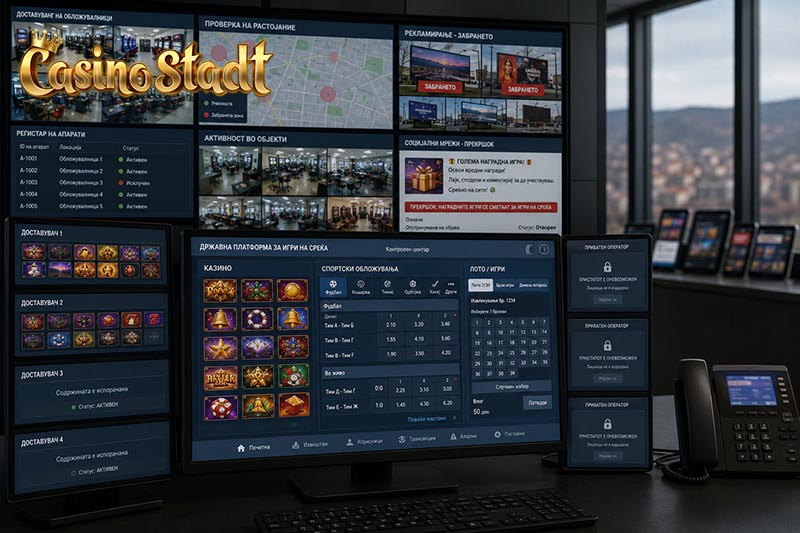
North Macedonia’s new gambling law creates a state-run online monopoly while tightening rules for betting shops, casinos, advertising and social-media giveaways.
Private Operators Are Shut Out
North Macedonia has ended private control of licensed online gambling.
The new Law on Games of Chance and Entertainment Games took effect on 14 July 2026 after being adopted on 29 June. Online casino games, sports betting and lottery products will now sit under one state-owned operator.
Private companies can still supply games, platforms and other technology through public tenders. They cannot hold the licence, manage players or run the gambling site.
The state owns the shop. Suppliers can only stock the shelves.
The Monopoly Was Already Taking Shape
The previous system allowed online operators to form joint ventures with the state, which held at least 51% ownership.
That model began to collapse after the May 2024 election. Authorities later moved to cancel licences held by operators including NOVO VLT, Mozzart, 77 BITS, Vezuv and 2Win.mk.
By the end of 2024, MegaWin was reportedly the only licensed online operator still active, and its position was tied up in legal disputes.
The new law therefore confirms a policy direction already under way.
Retail Operators Face Tougher Checks
Private companies can still run land-based casinos, betting shops and slot clubs, but the rules are getting tighter.
Casinos and slot halls must be at least 500 metres from primary and secondary schools. Operators will also face new requirements covering GPS systems, machine registration, equipment seals and technical standards.
Owners, directors, shareholders and business partners must pass suitability checks. Companies holding several licences will need to meet the minimum capital requirement for each one separately.
The distance and GPS rules begin on 1 January 2028. Other measures will be introduced within six to twelve months.
Gambling Ads Get Boxed In
The law also puts tighter limits on gambling advertising.
Exterior signs at gambling venues will generally be capped at 30cm by 100cm. Casinos within three kilometres of the border will receive more space, but flashing and illuminated signs are banned.
Ads cannot present gambling as a path to wealth, status or an escape from personal problems.
Celebrity endorsements are also banned when they imply gambling helped create the celebrity’s success.
Media ads must warn that gambling is restricted to adults and can cause addiction.
Social Giveaways Count as Gambling
The law reaches beyond casinos and bookmakers.
Social-media promotions asking users to like, tag or share a post for a chance to win a prize will be treated as gambling.
Organisers must obtain a licence and pay a fee equal to 18% of the prize fund before launching the promotion.
That means a routine Instagram giveaway could now land a company in gambling regulation, whether it expected to be there or not.
Players May Still Head Offshore
The state monopoly may be easier to supervise, but that does not mean players will use it.
The official platform will compete with offshore sites offering larger game libraries, bigger bonuses and more polished apps.
If the state product feels limited, players may simply look elsewhere.
That would leave them with fewer protections when withdrawals are delayed or accounts are closed. It would also reduce tax revenue and make gambling activity harder to track.
North Macedonia can control the licence. Keeping players on the licensed site will be the harder part.