
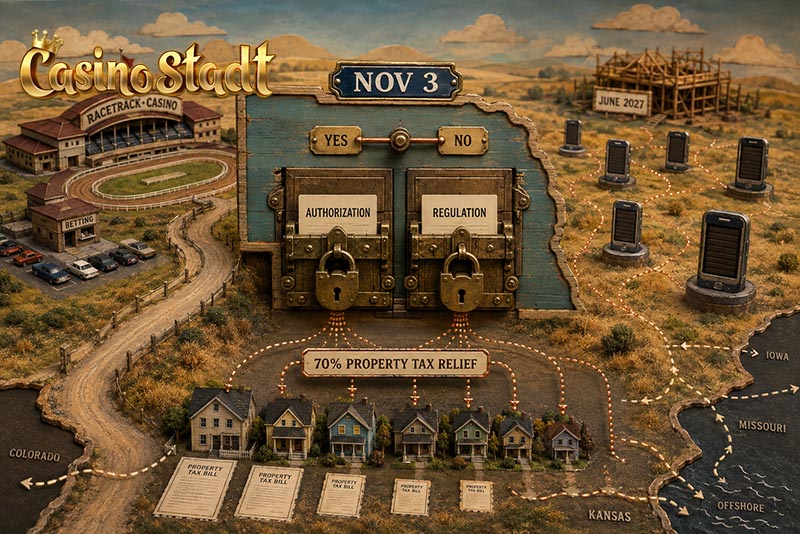
Nebraska voters will decide on November 3 whether sports betting can move from racetrack casinos to mobile apps, with two certified ballot measures covering both legalization and regulation.
Two Measures Put Mobile Betting Before Voters
Nebraska’s online sports betting debate is officially heading to the ballot after the Secretary of State certified two initiatives backed by Tax Relief Nebraska.
The first, the Online Sports Wagering Authorization Constitutional Amendment, would change the Nebraska Constitution to permit online sports wagering. The second, the Online Sports Wagering Regulation Initiative, lays out how a legal mobile market would operate. Both cleared the required statewide and county-level signature thresholds.
The constitutional amendment reached at least 138,473 valid signatures, while the regulatory initiative reached at least 96,918. Organizers also met Nebraska’s requirement for support across at least 38 counties. Election officials stopped verifying signatures once the petitions reached 110% of the totals needed for certification.
That means voters, rather than lawmakers, will now have the final word after earlier attempts to push mobile betting through the Nebraska Legislature stalled.
What Changes for Nebraska Bettors
Sports betting is already legal in Nebraska, but wagering currently has to take place at licensed racetrack casinos. For bettors used to opening an app in neighboring states, that is a fairly large catch.
Approval of the ballot measures would allow eligible players physically located in Nebraska to place wagers through licensed online platforms. Existing gaming operators could work with up to two online sportsbook platforms, while servers supporting those platforms would have to be located inside the state.
For the everyday sports bettor, the difference is simple: no more driving to a racetrack casino just to place a legal wager.
Big sportsbook brands are already circling the market. WarHorse Casinos has discussed partnerships involving DraftKings and FanDuel, giving Nebraska players a taste of the names that could eventually compete for their business if voters give mobile wagering the green light.
Property Tax Relief Takes Center Stage
Supporters are selling the proposal on more than convenience.
The regulatory measure would direct 70% of online sports betting tax revenue toward property tax relief, matching the share allocated from casino tax collections. Tax Relief Nebraska argues that keeping more wagering activity inside the state could create a useful new revenue stream instead of watching Nebraska bettors cross state lines or use offshore alternatives.
A study commissioned by the campaign and produced by Eilers & Krejcik Gaming estimated that legal mobile sports betting could generate just under $87 million in new state tax revenue during its first five years. Based on the proposed 70% allocation, roughly $61 million could go toward property tax relief over that period.
Those projections are still estimates, of course. Sports betting tax revenue depends on market size, operator performance, tax rules and how quickly customers move from existing betting options into regulated apps.
Industry Backing Brings Extra Scrutiny
The campaign has received support from casino interests and major sportsbook companies that stand to gain access to Nebraska’s market.
That backing has also attracted criticism. Opponents have questioned the influence of gambling companies on the petition campaign, while a complaint filed with the Nebraska Accountability and Disclosure Commission raised concerns about possible international influence connected to corporate ownership of companies funding the effort.
The broader argument against expansion is more familiar. Critics say putting sportsbooks directly onto smartphones makes gambling easier to access and could increase problem gambling, particularly among younger adults.
That leaves Nebraska voters weighing two very different pitches: supporters see regulated mobile wagering as money already being spent elsewhere that Nebraska could tax, while opponents see easier access as a social cost that tax receipts may not justify.
What Happens If Voters Say Yes
A successful vote would not mean sportsbooks suddenly light up across Nebraska the next morning.
The Nebraska Racing and Gaming Commission would first have to write and adopt rules covering the new online market. The proposed law gives the commission until June 1, 2027, to put those regulations in place.
Before election day, the Secretary of State’s Office is also expected to hold public hearings on the measures in each of Nebraska’s three congressional districts. The state’s 2026 general election takes place November 3.
For Nebraska bettors, that vote is the real starting line. A yes result could eventually put legal sportsbooks in their pockets. A no vote would leave the current retail-only setup intact and send the mobile betting debate back to square one.