
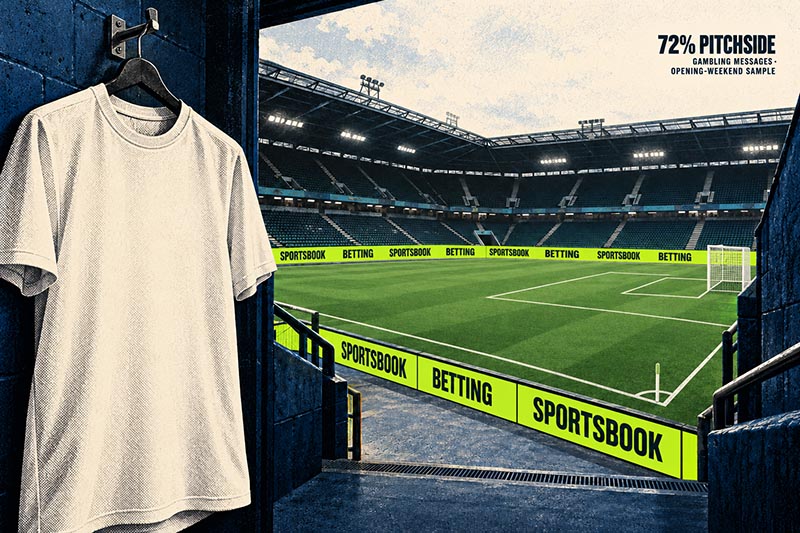
Removing betting sponsors from the front of Premier League shirts has left substantial gambling branding elsewhere in football broadcasts. New University of Bristol research found that pitchside advertising accounted for about 72% of gambling messages recorded during televised matches on the season’s opening weekend.
Published on October 21, the study counted 11,205 gambling messages across seven live UK match broadcasts from August 21 to 24. At least one message appeared on screen during almost 20% of the analyzed broadcast time.
The Restriction Covers One Sponsorship Position
The Premier League agreed in April 2023 to remove gambling sponsorship from the front of matchday shirts after the 2025/26 season. Clubs received a transition period before the voluntary restriction took effect.
Its scope matters. Gambling companies can still reach football audiences through other sponsorship assets, including sleeves, training clothing and stadium advertising. For viewers, those placements can remain visible throughout the coverage.
Bristol’s researchers found that gambling logos had virtually disappeared from shirt fronts. They also recorded 563 messages on sleeves and training kits, compared with an annual average of about 122 across the three earlier studies.
The Overall Count Fell, but Other Changes Contributed
Across match broadcasts, sports news, radio and sampled social media content, researchers recorded 15,571 gambling messages. That was below the totals from the previous two years, although approximately 42% above the 2023 count.
The report attributes much of the decline in live coverage to fewer broadcast sponsorship introductions. These are the brief sponsor segments around programming, and were outside the shirt restriction.
Excluding those introductions, messages during live broadcasts were 10.5% below the average recorded from 2023 to 2025. That comparison helps explain why the researchers consider the shirt measure’s contribution to the wider reduction limited.
The Findings Measure Visibility Across One Weekend
The message totals include repeated appearances of gambling branding. They do not represent thousands of separate advertising campaigns. The results also describe the sampled opening weekend, rather than exposure across an entire season.
Lead researcher Dr Raffaello Rossi argued that the findings raise questions about football’s voluntary approach. The report recommends broader restrictions covering gambling marketing during sporting events, alongside clearer harm warnings.
Those recommendations would extend beyond the existing shirt rule. They are proposals from the research team, and the report itself introduces no new obligations for clubs, broadcasters or betting operators.