
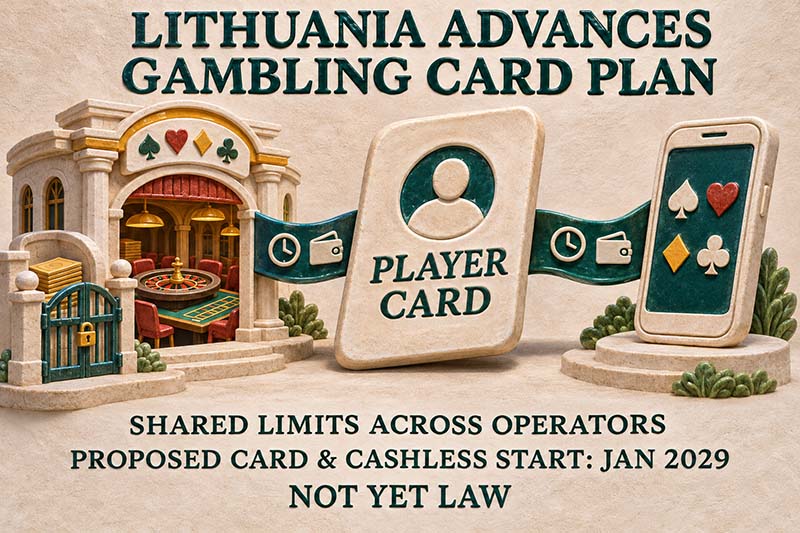
Lithuania’s parliament has begun considering legislation that would require a personal player card for online and in-person gambling and remove cash from gambling venues. The November 10 vote moves the proposal into committee review. The requirements have not become law.
The central change would connect gambling records across different companies. For players, switching operators would no longer leave their activity recorded in separate systems with separate limits.
Player Limits Would Follow the Person
Under the current rules, operators must enforce the money and time limits customers select. However, those protections work within each individual company. A player can move elsewhere and continue gambling under another operator’s limits.
The proposed player card, available in physical or digital form, would identify the customer and connect records of deposits, winnings, time limits and gambling restrictions. It would cover both online gambling and physical venues.
Anyone without the required card would be unable to gamble. Authorities say the shared records would help them monitor money flows and apply protections across operators.
Higher Loss Limits Would Require Financial Evidence
The bill also proposes individual financial checks when a player chooses a maximum monthly loss limit above €20,000. Operators would need to assess whether the customer’s income and financial circumstances support that limit.
Supporting evidence could include salary records, tax returns or bank statements. According to the Finance Ministry, a player required to provide those documents could not gamble without submitting them. The €20,000 figure would trigger an assessment, rather than establish a universal monthly loss cap.
The Card and Cash Rules Would Start in 2029
The government proposes May 1, 2027 for the broader amendments to take effect. The player card and cashless gambling requirements would follow on January 1, 2029, giving operators time to upgrade or replace equipment.
Lawmakers voted 34 in favor of considering the amendments, with no votes against or abstentions, according to BNS reporting carried by LRT. The Budget and Finance Committee will review the proposal before a planned return to parliament on December 17. Further parliamentary approval is still needed before the proposed dates become binding.