
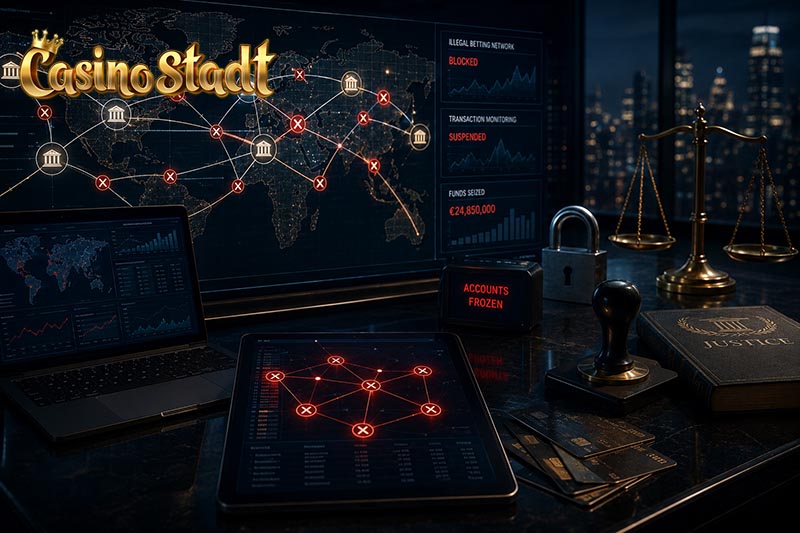
Brazil is moving past whack-a-mole website blocking and aiming straight at the bank accounts that keep illegal betting operators and unlicensed betting sites alive.
Bank Accounts Are Now in the Firing Line
Brazilian President Luiz Inácio Lula da Silva has signed a decree allowing the government to freeze funds tied to illegal online betting platforms, with recovered money potentially routed to public security programs after legal review.
The move gives authorities a faster way to squeeze operators that keep serving Brazilian players without a local licence. Instead of only chasing domains that can pop back up under a new name by breakfast, regulators can now target the payment rails behind the business.
Under the new framework, the Secretariat of Prizes and Betting, part of the Finance Ministry, will identify unauthorised operators. Once illegal activity is confirmed, banks and payment companies must freeze linked accounts within 24 hours and confirm compliance within 48 hours.
Fintechs Get Pulled Into the Fight
The decree does not stop with betting firms. A separate Finance Ministry rule makes banks and fintechs liable for unpaid taxes if they keep processing transactions for illegal operators after being notified by the government. Reuters also reported that companies and individuals advertising illegal betting platforms can be held responsible under the same rule.
That matters because illegal betting sites rarely run on vibes alone. They need payment processors, bank accounts, affiliates and ad channels. Brazil is now telling those middlemen: keep helping the wrong operators, and the bill may land on your desk too.
The Central Bank will oversee enforcement actions, while the Finance Ministry and Central Bank have 90 days to build a secure electronic notification system. Until then, existing federal digital channels will be used.
Blocked Sites Were Only Half the Battle
Brazilian officials say almost 50,000 illegal betting domains and about 350 operators have already been flagged for blocking or investigation since 2025. The problem, of course, is that blocked sites are annoyingly good at reincarnation. A new URL, a new mirror site, a fresh social media push, and the same risky operation is back in front of players.
Finance Minister Dario Durigan has framed the policy as a way to cut illegal operators off from the financial system. Frozen funds would go to the Justice Ministry for legal review before any transfer to the National Public Security Fund.
For licensed operators, this is a welcome clean-up effort. For unlicensed brands, it is a much nastier problem than a blocked homepage.
What This Means for Players
For everyday bettors, the message is fairly simple: playing at unlicensed betting sites in Brazil may become riskier, especially when withdrawals depend on payment networks now under heavier pressure. The decree says forfeiture proceedings should not interfere with money owed to bettors, which is an important safeguard. Still, nobody wants their bankroll trapped in a legal tug-of-war because a sketchy operator tried to dodge the local licensing system.
The safest play for Brazilian customers is to stick with authorised betting platforms. Legal sites may not always have the flashiest bonus banners, but they are far less likely to wake up to a frozen account, angry regulators and a payment provider suddenly pretending they have never met them.